

Multifocal Contact Lenses
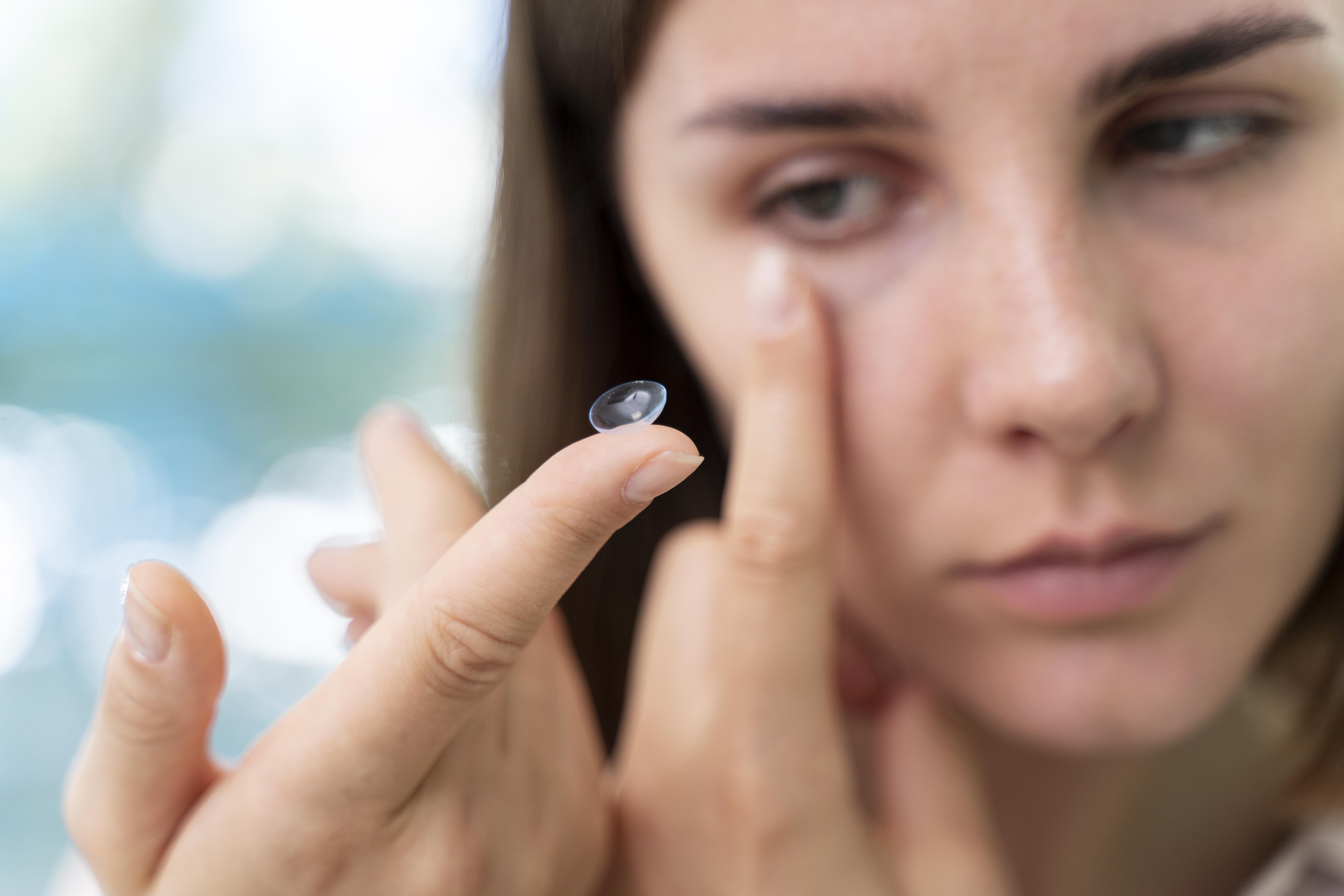
Multifocal Contact Lenses for Presbyopia in Singapore
Finding yourself holding your phone further away, increasing the text size, or reaching for reading glasses whenever you need to see something up close? If you are in your 40s or beyond, the change may be presbyopia — the normal age-related reduction in your eyes' ability to focus at near.
Reading glasses and progressive spectacles are not the only options. Multifocal contact lenses are designed to provide useful vision across near, intermediate and distance ranges, helping suitable wearers move between their phone, computer screen, conversations and distance vision without constantly changing between different pairs of glasses.
At EMME Visioncare, we provide professional multifocal contact lens fitting in Singapore. We fit multifocal contact lenses from leading manufacturers including Alcon, CooperVision, ACUVUE and Bausch + Lomb.
Our approach is not based on simply selling a particular brand or whichever multifocal lens happens to be available from stock. Different multifocal lens designs can perform differently from one person to another, even when their spectacle prescriptions appear similar.
Our optometrists assess your prescription, eye health, tear film, visual priorities and everyday lifestyle before selecting an appropriate lens to try. We then evaluate how the lens performs on your eyes and fine-tune the correction according to your actual distance, computer and near-vision requirements.
Whether you already wear contact lenses and have started needing reading glasses, or you are considering contact lenses for the first time, an assessment can help determine which multifocal contact lens approach may suit you.
Near Vision Getting Harder After 40?
Presbyopia commonly becomes noticeable during the 40s as the natural lens inside the eye becomes less flexible. Your distance prescription may not have changed very much, yet reading and other close-up tasks can gradually require more effort.
Common signs include:
- Holding your phone or menu further away to make the words clearer
- Increasing the font size on your phone or tablet
- Needing brighter light to read comfortably
- Difficulty switching focus between your screen and objects further away
- Eye strain or tired eyes after prolonged reading or computer work
- Removing your distance glasses to read if you are short-sighted
- Wearing reading glasses over your existing contact lenses
These symptoms are commonly associated with presbyopia, but changes in vision can have other causes as well. A comprehensive eye examination allows us to check both your prescription and your eye health before recommending a new form of vision correction.
What Are Multifocal Contact Lenses?
Multifocal contact lenses contain more than one focusing power within each lens. Different lens designs distribute power for distance, intermediate and near vision across different areas of the contact lens.
Instead of changing spectacles every time your viewing distance changes, your visual system receives information for more than one distance at the same time. Your brain gradually learns to use the image that is most useful for the task you are doing.
For suitable wearers, this can make daily activities such as checking a phone, working on a laptop, looking across a meeting room, shopping, exercising or socialising more convenient.
Multifocal lenses are one of several ways of correcting presbyopia. Other options include reading glasses, progressive spectacles, single-vision contact lenses combined with reading glasses and monovision contact lenses.
The most appropriate solution depends on your eyes, prescription and what you want from your vision.
Who May Be Suitable for Multifocal Contact Lenses?
Multifocal contact lenses may be worth considering if you:
- Are starting to struggle with reading or close-up vision in your 40s or later
- Already wear contact lenses but now need reading glasses over them
- Wear progressive spectacles but would like a glasses-free option for some activities
- Frequently move between your phone, computer and distance vision
- Prefer contact lenses for exercise, travel, social occasions or everyday wear
- Want to reduce your dependence on reading glasses
- Have never worn contact lenses before but would like to explore whether they could suit your lifestyle
Age alone does not determine whether multifocal lenses will work for you. Prescription, astigmatism, eye health, tear quality, visual demands and your expectations can all influence the fitting.
Already Wearing Contact Lenses but Suddenly Need Reading Glasses?
This is one of the most common reasons adults explore multifocal contact lenses. Instead of abandoning contact lenses when presbyopia develops, it may be possible to change the lens design and continue wearing contacts for both everyday distance and near tasks.
Multifocal Contact Lens Brands We Fit
There is no single multifocal contact lens that is automatically the best choice for every wearer.
Different manufacturers use different lens materials, optical designs, replacement schedules and approaches to balancing distance, intermediate and near vision.
At EMME Visioncare, we fit multifocal contact lenses from several major international manufacturers, including:
- Alcon
- CooperVision
- ACUVUE
- Bausch + Lomb
Rather than limiting your fitting to one manufacturer, our optometrist can consider different multifocal designs according to your prescription, eye health, tear-film findings, previous contact lens experience and the visual tasks that are most important to you.
This is particularly useful for presbyopia because successful multifocal contact lens wear often involves finding the right balance between distance clarity, computer vision, reading vision and comfort.
A Fitting-First Approach, Not a Stock-First Approach
EMME Visioncare does not base multifocal contact lens recommendations on a fixed selection of lenses kept in retail stock.
Instead, we take a fitting-first approach. The aim is to identify an appropriate lens based on your eyes and your visual requirements before recommending the contact lens solution.
This gives us greater flexibility to consider lenses from different manufacturers when appropriate rather than assuming that one multifocal design will suit everyone.
Why Can Different Multifocal Lenses Perform Differently?
Although two lenses may both be described as multifocal contact lenses, their optical design and fitting characteristics can differ.
Differences between lenses can include:
- How distance and near powers are distributed through the lens
- The available near addition powers
- Lens material
- Surface and moisture characteristics
- Lens diameter and base curve
- Daily disposable or reusable replacement schedule
- Available prescription ranges
- Options for people with astigmatism
This is why selecting a multifocal contact lens from a prescription alone does not always produce the desired outcome. The lens should be assessed on the eye and evaluated under real-world viewing conditions.
Our Multifocal Contact Lens Fitting Process
A successful multifocal fitting involves more than matching a lens to a prescription. Two people with similar spectacle prescriptions may prefer different multifocal lens designs because their work, reading habits, screen distances and visual priorities are different.
1. We Understand How You Actually Use Your Vision
We begin by discussing where you are having difficulty and what you want your contact lenses to achieve.
For example:
- How many hours a day do you use a computer?
- Do you frequently read small print?
- Is driving important to you?
- Do you spend most of your day indoors or outdoors?
- Do you already wear contact lenses?
- Have your existing lenses become uncomfortable?
- Would you wear lenses every day or mainly for weekends, exercise or social occasions?
These details help us decide which visual distances should receive the greatest priority during your fitting.
2. We Check Your Prescription and Eye Health
Your optometrist assesses your distance and near prescription and examines the health of your eyes before fitting your contact lenses.
Because a contact lens sits directly on the eye, we also consider factors such as the condition of your cornea, eyelids and tear film. Additional measurements may be taken where useful.
If you have not had your eyes checked recently, we may recommend a comprehensive eye examination as part of the assessment.
3. We Select an Appropriate Multifocal Lens to Trial
Once we understand your prescription and visual requirements, your optometrist selects an appropriate multifocal contact lens design to begin the fitting.
Because we work with multifocal lenses from manufacturers such as Alcon, CooperVision, ACUVUE and Bausch + Lomb, the decision is not simply about choosing a brand name.
We consider factors including:
- Your distance prescription
- The amount of near addition you require
- Whether you have astigmatism
- Your tear film and ocular surface
- Your previous contact lens experience
- Whether you prefer daily disposable or reusable lenses
- Your computer and near-working distances
- Your distance-vision requirements
- How frequently you intend to wear contact lenses
We then assess how the trial lens sits and moves on your eye and check your vision at distance, intermediate and near.
4. We Fine-Tune the Lens Based on Your Real-World Vision
A multifocal fitting is not simply about achieving the best possible result on one line of an eye chart. The more important question is whether your vision works for your everyday life.
We can assess tasks such as looking at your phone, working at your usual computer distance and viewing objects across the room.
Your optometrist may adjust the prescription, near addition or lens design depending on the result.
If one multifocal design does not provide the desired balance, another design or manufacturer may sometimes perform differently. This is one reason access to multiple multifocal lens ranges can be valuable during a more challenging fitting.
5. We Review, Refine and Follow Up
Multifocal contact lenses may require an adaptation period while your visual system becomes accustomed to receiving distance and near information through the same lenses.
If the initial lenses are not giving you the vision or comfort we are aiming for, the fitting does not necessarily stop there.
Depending on the findings, your optometrist may consider:
- Changing the distance or near power
- Changing the visual balance between the two eyes
- Trying a different multifocal design
- Considering another manufacturer
- Changing lens material
- Changing the replacement schedule
- Addressing dryness or ocular-surface factors
- Considering monovision or another contact lens strategy where appropriate
Follow-up allows us to evaluate the result after you have experienced the lenses during your normal working and daily environment.
Daily vs Monthly Multifocal Contact Lenses
Multifocal contact lenses are available in different replacement schedules. Two common options are daily disposable and reusable monthly lenses.
| Option | Daily Disposable Multifocal Lenses | Monthly Multifocal Lenses |
|---|---|---|
| Replacement | A fresh pair each day | Reused according to the prescribed replacement schedule |
| Cleaning | No overnight cleaning or storage | Requires appropriate daily cleaning and storage |
| Convenience | Convenient for travel, sport and occasional wear | Can be practical for regular contact lens wearers |
| Comfort | A fresh lens is inserted each time it is worn | Comfort depends partly on material, care and replacement habits |
| Cost | Depends on prescription, lens design and frequency of wear | Depends on prescription, lens design and replacement schedule |
There is no single best replacement schedule for everyone. We recommend a lens based on your prescription, eye health, wearing habits, budget and how frequently you intend to use contact lenses.
Can You Wear Multifocal Contact Lenses with Astigmatism?
In many cases, yes. Having astigmatism does not automatically rule out multifocal contact lenses.
Some prescriptions can be corrected using multifocal lens designs that also account for astigmatism. Availability depends on the amount and type of astigmatism, your other prescription values and the lens parameters available.
For prescriptions that fall outside standard lens ranges, your optometrist can discuss alternative contact lens strategies.
Learn more about our contact lens fitting services.
What If I Have Dry Eyes?
Dryness does not always mean you have to stop wearing contact lenses, but the reason for the discomfort should be assessed.
Contact lens comfort can be influenced by your tear film, eyelid health, lens material, replacement schedule, environment, screen use and wearing time. Singapore's air-conditioned indoor environments and prolonged digital screen use can make dryness particularly noticeable for some wearers.
If you experience burning, grittiness, intermittent blur or lenses that become uncomfortable later in the day, tell your optometrist during your assessment.
We can evaluate whether a different contact lens approach may help and whether underlying dry-eye factors should be managed alongside your contact lens fitting.
Learn more about dry eye assessment and management at EMME Visioncare.
Multifocal Contact Lenses vs Monovision
Multifocal lenses are not the only contact lens option for presbyopia. Another approach is monovision.
With monovision, one eye is primarily corrected for distance while the other is adjusted more towards near vision. Your brain then combines information from both eyes.
With multifocal lenses, both eyes generally receive a range of distance and near information instead.
| Option | How It Works | Considerations |
|---|---|---|
| Multifocal contact lenses | Each lens contains powers intended to support vision across more than one distance. | Can provide a useful range of vision, but fitting and adaptation are important. |
| Monovision contact lenses | One eye is biased towards distance and the other towards near. | Can work well for selected wearers, although the visual balance feels different from multifocal correction. |
| Single-vision contacts + reading glasses | Contact lenses correct distance while reading glasses are added for close work. | Simple and effective, but reading glasses are still required. |
| Progressive spectacles | Spectacle lenses provide distance, intermediate and near zones. | No contact lens wear is required, but spectacles remain necessary. |
There is no universally superior solution. Your visual priorities, prescription and eye health help determine which approach is most appropriate.
What Should You Expect When Trying Multifocal Contact Lenses?
One of the most important parts of a successful multifocal fitting is having realistic expectations.
Multifocal contact lenses aim to create a useful balance across several viewing distances rather than providing one single focal point.
During initial adaptation, some wearers may notice:
- Slight softness or fluctuation of vision at certain distances
- A short delay when changing focus between near and far
- Halos, glare or mild ghosting, particularly in low light
- One viewing distance initially feeling clearer than another
Adaptation varies between individuals. Follow-up is important if your vision is not meeting your everyday needs because the lens power or design may require adjustment.
Some wearers achieve useful vision for most everyday activities, while others may still prefer occasional reading glasses for particularly small print, prolonged close work or difficult lighting.
Our aim is not to promise perfect vision at every distance. It is to find the most useful balance of vision and comfort for the way you actually live and work.
Never Worn Contact Lenses Before?
You do not need to have worn contact lenses when you were younger to consider multifocal lenses now.
First-time wearers receive guidance on inserting and removing their lenses, appropriate hygiene, wearing schedules and lens care where reusable lenses are prescribed.
Our team will take you through the process and review how the lenses are performing before you settle into regular wear.
You can also read more about our general contact lens fitting service in Singapore.
Why Professional Multifocal Contact Lens Fitting Matters
Multifocal contact lens fitting involves more variables than simply entering your distance spectacle prescription.
Presbyopia creates an additional challenge because we are trying to provide useful vision across several distances simultaneously.
Your optometrist therefore needs to consider not only what you can see, but also how you use your vision.
For example, one person may spend most of the working day viewing two computer monitors. Another may drive frequently and only occasionally use a phone. Someone else may spend long periods reading documents or doing detailed close-up work.
These patients may have similar prescriptions but may benefit from different multifocal strategies.
At EMME Visioncare, our goal is therefore not simply to provide you with "a multifocal contact lens".
Our goal is to find a multifocal contact lens solution that provides a useful balance of vision, comfort and convenience for your individual needs.
Why Choose EMME Visioncare for Multifocal Contact Lens Fitting?
A Fitting-First Approach Rather Than a Stock-First Approach
We do not believe every person with presbyopia should be fitted with the same multifocal lens.
EMME Visioncare fits lenses from multiple leading manufacturers, allowing our optometrists to consider different designs according to your prescription, eye health and visual requirements.
Multifocal Lenses from Leading Contact Lens Manufacturers
Depending on your prescription and fitting requirements, we can consider multifocal contact lenses from manufacturers including Alcon, CooperVision, ACUVUE and Bausch + Lomb.
We do not suggest that one brand is universally better than another. The most appropriate option is the one that provides a suitable overall result for your individual eyes and lifestyle.
Professional Assessment by Our Optometrists
Contact lens fitting should begin with an accurate prescription and an assessment of the eyes rather than simply selecting lenses from an old spectacle prescription.
Our optometrists assess your vision, eye health, tear-film factors and contact lens fit before recommending an appropriate option.
Fitting Based on How You Actually Use Your Vision
We want to understand what you need to see during a normal day.
A person spending many hours in front of computer screens may require a different visual balance from someone who spends much of the day driving, meeting clients, exercising or performing detailed near work.
Experience Across Different Contact Lens Needs
EMME Visioncare provides fitting across a broad range of contact lens needs, including daily disposable and reusable soft lenses, toric lenses for astigmatism, multifocal lenses, RGP and specialty lenses, myopia-control contact lenses and Orthokeratology.
Comfort and Eye Health Are Part of the Fitting
Clear vision is only one part of successful contact lens wear. We also consider comfort, corneal health, the ocular surface, tear-film factors and how the contact lens behaves on your eye.
Follow-Up and Fine-Tuning
Multifocal fitting sometimes requires refinement.
Follow-up allows us to adjust the prescription or consider another lens design based on how your contact lenses perform during your normal day.
Multifocal Contact Lens Fitting at Our Singapore Locations
Multifocal contact lens assessments are available at EMME Visioncare's two Singapore locations.
EMME Visioncare — The Cathay
2 Handy Road, #02-13 The Cathay Mall
Singapore 229233
Beside Dhoby Ghaut MRT
Tel: +65 8690 3598
Opening hours: 11:00 AM–9:00 PM daily
View The Cathay branch details →
EMME Visioncare — Jelita Mall
293 Holland Road, #02-17 Jelita Mall
Singapore 278628
Tel: +65 9383 8569
Opening hours: 10:00 AM–8:00 PM daily
Find Out Whether Multifocal Contact Lenses Are Right for You
If close-up vision is becoming frustrating but you would prefer not to depend on reading glasses throughout the day, multifocal contact lenses may be worth exploring.
Book a contact lens assessment with EMME Visioncare. Our optometrist will check your prescription and eye health, discuss how you use your vision and recommend an appropriate contact lens strategy for your needs.
Frequently Asked Questions About Multifocal Contact Lenses
At what age do people usually need multifocal contact lenses?
Presbyopia commonly becomes noticeable during your 40s, although the timing differs between individuals. If your distance vision remains comfortable but reading and phone use are becoming more difficult, an eye examination can help determine whether presbyopia is responsible.
Can multifocal contact lenses replace reading glasses?
They can reduce dependence on reading glasses for many suitable wearers by providing correction for near as well as intermediate and distance vision. Results vary, and some people may still prefer occasional reading glasses for particularly demanding near tasks.
Which multifocal contact lens brands does EMME Visioncare fit?
EMME Visioncare fits multifocal contact lenses from several leading manufacturers, including Alcon, CooperVision, ACUVUE and Bausch + Lomb. The lens recommended for you depends on your prescription, eye health, visual requirements and how different lens designs perform during the fitting.
Which is the best brand of multifocal contact lens?
There is no single multifocal contact lens brand that is best for everyone. Different manufacturers use different materials and multifocal optical designs, and individuals can respond differently to each design.
Rather than selecting a lens based only on the brand, our optometrist evaluates your prescription, eye health, visual priorities and response to the trial lenses before recommending an appropriate option.
Does EMME Visioncare keep multifocal contact lenses in stock?
We do not base our multifocal fitting service around a fixed selection of lenses kept in retail stock.
Our priority is first to determine which contact lens design is appropriate for your prescription, eyes and visual needs. This allows the fitting decision to be driven by the desired visual and clinical outcome rather than simply by which product happens to be available on the shelf.
Can I try another multifocal lens if the first one does not work well?
Yes. The first lens is often a starting point in the fitting process. If the initial design does not provide the desired balance of distance, intermediate and near vision, your optometrist may adjust the prescription or consider another multifocal design or manufacturer where appropriate.
Can I wear multifocal contact lenses if I have never worn contacts before?
Yes. Previous contact lens experience is not required. Your optometrist will assess whether your eyes are suitable and teach you how to insert, remove and care for the lenses.
Do multifocal contact lenses work for computer use?
Multifocal lenses are designed to provide vision across more than one viewing distance, including intermediate distances commonly used for computers. Your working distance and screen setup are useful information during the fitting.
Can I wear multifocal contact lenses if I have astigmatism?
Often, yes. Some prescriptions with astigmatism can be corrected using suitable multifocal designs. Availability depends on your complete prescription, so an assessment is needed to determine the options.
Can I wear multifocal contact lenses if I have dry eyes?
Possibly. The cause and severity of dryness should first be assessed. Lens material, replacement schedule, wearing time and management of underlying dry-eye factors can all influence comfort.
How long does it take to adapt to multifocal contact lenses?
Adaptation varies between wearers. Some people become comfortable with the multifocal optics quickly while others require more time. If vision remains unsatisfactory, the fitting should be reviewed rather than simply waiting indefinitely.
Are daily or monthly multifocal contact lenses better?
Neither is automatically better for everyone. Daily disposables provide the convenience of a fresh lens each day, while reusable lenses may suit regular wearers who are comfortable following the required cleaning and replacement routine.
Are multifocal contact lenses the same as progressive glasses?
No. Both aim to provide vision at multiple distances, but they work differently. Progressive spectacle lenses contain different viewing zones across the spectacle lens, while multifocal contact lenses sit directly on the eye and use multifocal optical designs.
How much do multifocal contact lenses cost in Singapore?
Cost depends on the lens design, manufacturer, daily or reusable replacement schedule, prescription and number of lenses required.
Rather than quoting one price for every wearer, we can explain the suitable lens options and associated costs after assessing your prescription and fitting requirements.
Do I need an eye examination before getting multifocal contact lenses?
An up-to-date assessment is recommended. Multifocal contact lenses need to account for both distance and near vision, and contact lens fitting also requires assessment of the eye rather than relying only on a spectacle prescription.
Clinically reviewed by: EMME Visioncare Optometry Team
Last reviewed: September 2026
References
This page provides general eye-care information and does not replace an individual eye examination. Contact lens recommendations depend on your prescription, eye health and clinical assessment.