

Dry Eye Assessment & Management in Singapore
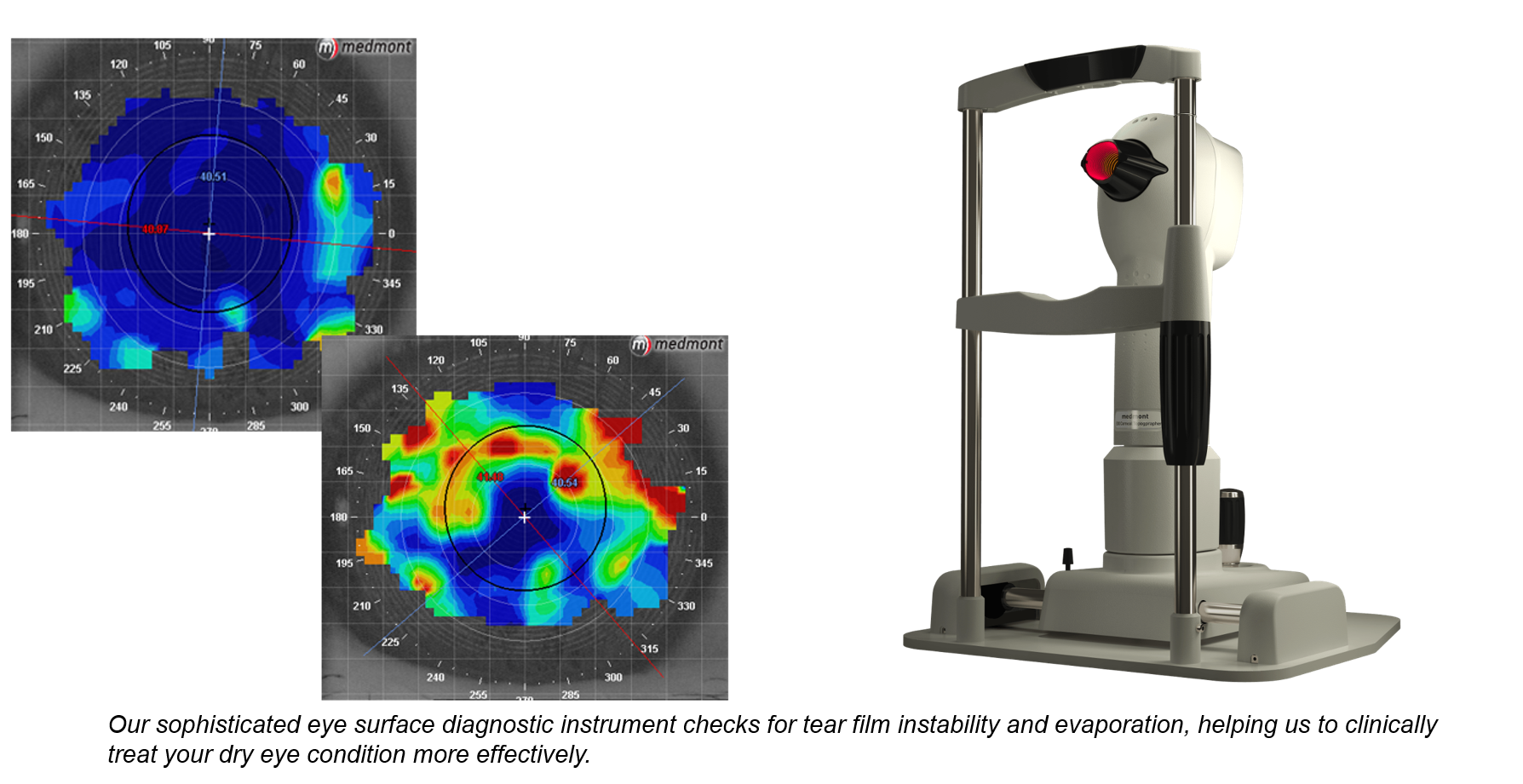
Dry, gritty, burning or watery eyes can be more than a temporary irritation. Dry eye is a common, often persistent condition in which the tear film and eye surface are not staying stable and comfortable. It can cause fluctuating vision, redness, stinging, tired eyes and a constant feeling that something is in the eye.
At EMME Visioncare, our optometrists look beyond the symptom of “dryness”. We assess the tear film, eyelids, blinking and surface of the eye to identify the factors that may be contributing to your symptoms, then recommend a management plan based on what we find.
If your eyes remain uncomfortable despite using lubricating drops, if contact lenses have become difficult to wear, or if screen use and air-conditioning make your symptoms worse, a dry eye assessment can help clarify what is happening.
Dry eye assessments and management are available at EMME Visioncare at The Cathay and Jelita Mall.
What are the symptoms of dry eye?
Dry eye does not always feel simply “dry”. Symptoms vary from person to person and may change during the day.
- Gritty, sandy or foreign-body sensation
- Burning, stinging or sore eyes
- Redness or irritation
- Eyes that feel tired or heavy
- Blurred or fluctuating vision that clears after blinking
- Discomfort during prolonged reading or screen use
- Contact lenses becoming uncomfortable, especially later in the day
- Sticky or stringy mucus around the eyes
- Unexpectedly watery eyes
Watery eyes can still be a sign of dry eye. When the eye surface becomes irritated, the eyes may produce a reflex flood of watery tears. These tears do not necessarily have the same composition or stability as a healthy tear film, so the underlying problem can remain.
What causes dry eye?
Dry eye is usually multifactorial, which means there may be more than one contributing factor. Current dry-eye guidance emphasises identifying the individual drivers of a person's symptoms rather than assuming everyone has the same type of problem.
Common contributors include:
- Rapid evaporation of the tear film
- Reduced production of the watery component of tears
- Meibomian gland dysfunction (MGD), where the oil-producing glands in the eyelids do not function normally
- Blepharitis or inflammation around the eyelid margins
- Reduced or incomplete blinking during prolonged screen use
- Long periods in air-conditioned, dry or windy environments
- Contact lens wear
- Age-related and hormonal changes
- Certain systemic medications
- Previous eye procedures or other ocular-surface conditions
Because several factors can overlap, persistent symptoms are better assessed than treated by repeatedly changing eye drops without knowing the likely cause.
Different types of dry eye
Dry eye is often described according to the main factors affecting the tear film. In practice, many people have a mixture rather than one isolated type.
Evaporative dry eye
In evaporative dry eye, tears are present but the tear film breaks up or evaporates too quickly. A common contributor is meibomian gland dysfunction. The meibomian glands along the eyelids produce oils that form the outer layer of the tear film and help slow evaporation.
Aqueous-deficient dry eye
In aqueous-deficient dry eye, the eyes do not produce enough of the watery component of the tear film. The reasons can vary, which is why the eye surface, symptoms and health history need to be considered together.
Mixed dry eye
Many people have both tear-production and evaporation-related factors. Eyelid inflammation, blinking behaviour, environmental exposure and contact-lens wear may further influence symptoms. Management is therefore tailored to the findings rather than based on a single label.
What is meibomian gland dysfunction (MGD)?
Meibomian gland dysfunction is a common contributor to evaporative dry eye. The meibomian glands are small oil-producing glands located within the upper and lower eyelids. Their oils help form the outer layer of the tear film and reduce evaporation.
When the gland openings become obstructed or the oil becomes thick or poor in quality, the tear film may become less stable. This can lead to burning, grittiness, fluctuating vision and discomfort that often becomes more noticeable later in the day.
MGD may occur together with blepharitis or other eyelid-margin changes. This is one reason a dry eye assessment should include the eyelids and tear film, not only a discussion about which lubricating drop to use.
Dry eye in Singapore: screens, air-conditioning and daily life
Dry-eye symptoms are common in Singapore, and everyday environments can make them more noticeable. Long hours in air-conditioned offices, classrooms, vehicles and shopping centres can increase tear evaporation. Prolonged use of computers and mobile devices can also reduce how often and how completely we blink.
A normal blink spreads a fresh layer of tears across the eye. During concentrated screen use, blinking may become less frequent or incomplete, allowing the tear film to become unstable between blinks.
Simple changes may help alongside a personalised management plan:
- Take regular visual breaks during prolonged screen work.
- Make a conscious effort to blink fully rather than only partially.
- Avoid having strong air-conditioning or a fan blowing directly at your face for long periods.
- Follow the eye-drop, eyelid-care and contact-lens advice recommended after your assessment.
How we assess dry eye at EMME Visioncare
A dry eye assessment is not simply a test of how many tears you produce. We look for the combination of factors that may be affecting your tear film and ocular surface.
1. Your symptoms and daily routine
We first discuss what you are experiencing, when symptoms occur and what seems to make them better or worse. Screen use, working environment, contact-lens wear, current eye drops, general health, medications and previous eye procedures can all provide useful context.
2. Examination of the eye surface and eyelids
Using a slit-lamp microscope, our optometrist examines the front surface of the eye, eyelid margins and surrounding structures. We look for signs that may help explain irritation, including eyelid inflammation, meibomian gland dysfunction and changes affecting the ocular surface.
3. Tear-film and blinking assessment
We assess how the tear film behaves between blinks and whether blinking is complete and effective. Where appropriate, we may use diagnostic dyes or available imaging technology to obtain more information about tear-film stability and the eye surface.
4. Identifying likely contributing factors
Dry eye can overlap with other causes of red, itchy, sore or watery eyes. The examination helps us consider whether symptoms are more consistent with dry eye, eyelid disease, allergy, contact-lens-related irritation or another ocular-surface problem.
5. A personalised management plan
Your plan is based on the findings of the assessment. Not every patient needs the same treatment, and not every dry eye problem is solved by adding more lubricating drops.
If you are also due for a broader eye-health assessment, dry-eye evaluation can be incorporated into a comprehensive eye examination.
How EMME Visioncare manages dry eye
Dry eye is often a long-term condition that is managed rather than permanently “cured”. The aim is to address relevant contributing factors, improve comfort and tear-film stability, and monitor the eye surface over time.
Depending on your assessment, management may include one or more of the following.
Lubricating and appropriate eye drops
Lubricating eye drops can supplement the natural tear film and reduce friction and irritation. Different formulations have different properties, so the most suitable option depends on factors such as your symptoms, tear-film findings, contact-lens use and how frequently drops are required.
For people who need frequent lubrication, a preservative-free product may sometimes be preferred. If a medicated eye drop or treatment outside routine optometric management is indicated, we will advise on the appropriate next step or referral.
Warm compresses for meibomian gland dysfunction
When meibomian gland dysfunction is contributing to dry eye, controlled eyelid warming may help soften thickened oils within the glands and support normal oil flow.
If a warm compress is recommended for you, your optometrist will explain the technique and frequency. A typical routine may involve applying a clean, comfortably warm compress or suitable eye mask to closed eyelids for around 8–10 minutes. The compress should be warm rather than painfully hot, and instructions may be adjusted according to your findings.
Lid scrub and eyelid hygiene
Where blepharitis, debris or eyelid-margin inflammation contributes to symptoms, regular eyelid hygiene may form part of the management plan. This can involve a suitable lid-cleaning product and a consistent routine to keep the lid margins clean.
We can show you how to perform eyelid care safely and how often it should be done. Aggressive rubbing or using unsuitable products around the eyes can cause additional irritation, so technique matters.
Screen and environmental adjustments
Dry eye management may include practical changes to reduce tear evaporation and improve blinking. This is especially relevant for people who spend much of the day using digital devices or working in strong air-conditioning.
We may discuss regular breaks, complete blinking, workstation habits and ways to reduce direct airflow toward the eyes.
Contact-lens adjustments
Dryness does not automatically mean that you have to stop wearing contact lenses permanently. Lens material, design, fit, replacement schedule, wearing time and the condition of the tear film can all affect comfort.
If contact lenses contribute to your symptoms, we may recommend changes to your lenses or wearing routine after examining your eyes. EMME also provides specialist contact-lens fitting, including options for people who struggle with dryness in standard lenses.
Read more about contact lenses for dry eyes or our broader contact lens fitting service.
Monitoring and follow-up
Dry eye can fluctuate with environment, health, medication, screen habits and contact-lens use. Follow-up allows us to review whether symptoms and clinical signs are improving and adjust the management plan where needed.
The timing of follow-up is individual. Some people improve with relatively simple changes, while persistent or more complex ocular-surface problems may require closer monitoring or additional care.
Referral and co-management when needed
EMME Visioncare is a primary eye-care practice. If your findings suggest that you need medical or procedural treatment beyond our scope, or if symptoms are unusually severe or not responding as expected, we can recommend referral or co-management with an ophthalmologist.
This ensures that dry eye and other ocular-surface conditions are managed at the appropriate level of care rather than leaving persistent symptoms uninvestigated.
Why eye drops may not be enough
Lubricating drops can be very helpful, but they mainly supplement the tear film. If the underlying problem involves meibomian gland dysfunction, eyelid inflammation, poor blinking, environmental exposure or contact-lens-related irritation, drops alone may not address the main driver.
This is why an assessment is useful when you find yourself using drops repeatedly without lasting improvement. The goal is not simply to recommend “stronger” drops, but to understand what is making the tear film unstable and address the factors that can be managed.
Dry eyes and contact lenses
Contact lenses sit within the tear film, so tear-film quality and lens fit have a direct effect on comfort. Some people experience dryness only after several hours of lens wear, while others find that their previous lenses have gradually become less comfortable.
An assessment can help determine whether symptoms are related mainly to the ocular surface, the contact lens itself, wearing habits, or a combination of factors.
Depending on your eyes and prescription, options may include changing lens material or design, adjusting replacement frequency or wearing time, improving eyelid and tear-film health, or considering another form of vision correction.
Dry eye or eye allergy: how can you tell the difference?
Dry eye and allergic eye disease can overlap. Both may cause redness, watering and irritation. Itching is often prominent with allergy, while burning, grittiness and fluctuating vision are commonly reported with dry eye, but symptoms alone cannot always distinguish them.
An eye examination can help identify whether dry eye, allergy, eyelid disease, infection or another condition is contributing to the problem. Avoid self-treating a persistent red or uncomfortable eye indefinitely without an assessment, especially if symptoms are worsening.
When should you book a dry eye assessment?
Consider an assessment if:
- Your eyes feel dry, gritty, burning, sore or watery on a regular basis.
- Your vision frequently blurs and clears after blinking.
- Symptoms worsen during screen use or in air-conditioned environments.
- Your contact lenses are becoming uncomfortable or you cannot wear them as long as before.
- You are using over-the-counter lubricating drops frequently without adequate relief.
- You have recurring eyelid irritation, crusting or signs of blepharitis.
- Dryness is interfering with reading, work, driving or everyday comfort.
When is urgent eye care needed?
Dry eye usually causes irritation rather than an eye emergency. However, seek prompt medical eye care if you develop severe eye pain, marked light sensitivity, a sudden drop in vision, significant injury or chemical exposure, or a very red and painful eye.
Contact lens wearers: remove your lenses if an eye becomes red, painful or unusually sensitive to light. Persistent redness, pain or reduced vision while wearing contact lenses needs prompt professional assessment because infection and other complications must be ruled out.
Frequently asked questions about dry eye
Can dry eye be cured?
Dry eye is often a chronic or recurring condition, so management is usually aimed at controlling symptoms, improving tear-film stability and addressing contributing factors. Some temporary causes may settle, while others require ongoing care. The best approach depends on what is driving the problem in your eyes.
Why are my eyes watery if I have dry eye?
An irritated eye surface can trigger reflex tearing. This sudden watery response does not necessarily create a stable, well-balanced tear film, so you can experience watering and dryness at the same time.
Does screen time make dry eye worse?
It can. People often blink less frequently or less completely while concentrating on a screen. This gives tears more time to evaporate between blinks. Regular breaks and deliberate full blinking can help, particularly when combined with treatment directed at any underlying tear-film or eyelid problem.
Can air-conditioning cause dry eyes?
Air-conditioning can aggravate dry-eye symptoms by increasing tear evaporation, especially when airflow is directed toward the face for long periods. This is a common issue in offices, classrooms, vehicles and other indoor environments in Singapore.
What is MGD and how is it related to dry eye?
MGD stands for meibomian gland dysfunction. The meibomian glands in the eyelids produce oils that help stop tears from evaporating too quickly. If the glands become obstructed or produce abnormal oils, the tear film may become unstable and dry-eye symptoms can develop. Warm compresses and eyelid hygiene are among the measures that may be recommended when MGD is present.
Are lubricating eye drops enough?
Sometimes. If symptoms are mild and temporary, lubrication may provide enough relief. Persistent dry eye can involve MGD, blepharitis, contact-lens issues, reduced blinking or other factors that also need attention. If you are repeatedly using drops without lasting improvement, an assessment is worthwhile.
Should I use preservative-free eye drops?
Preservative-free lubricants may be preferable for some people, particularly when drops are needed frequently or the ocular surface is sensitive. The best formulation depends on your symptoms, tear-film findings and how you use the drops, so ask your optometrist which option is appropriate for you.
Can I still wear contact lenses if I have dry eyes?
Often, yes. Suitability depends on the cause and severity of the dryness, the health of the eye surface and the type of lens you wear. A different material, design, replacement schedule or wearing routine may improve comfort. Some people may need a break from lenses while an active ocular-surface problem settles.
How often do I need follow-up for dry eye?
There is no single schedule for everyone. Follow-up depends on the severity of your symptoms, the cause, the treatment being used and how well you respond. Your optometrist will recommend a review interval based on your individual findings.
Why choose EMME Visioncare for dry eye assessment?
- Cause-focused assessment: we look at the tear film, eyelids, blinking and ocular surface rather than treating every patient the same way.
- Registered optometrists: our optometrists provide primary eye care and comprehensive eye examinations in Singapore.
- Contact-lens expertise: we can assess how lens type, fit and wearing habits may be contributing to dryness and discuss suitable alternatives where appropriate.
- Ongoing monitoring: dry eye can change over time, so follow-up can be used to review progress and adjust management.
- Referral when appropriate: if your condition requires care outside our scope, we can recommend ophthalmology referral or co-management.
- Two convenient locations: appointments are available at The Cathay near Dhoby Ghaut and at Jelita Mall on Holland Road.
Learn more about EMME Visioncare and our optometry team.
Book a dry eye assessment in Singapore
If dry, gritty, burning, watery or tired eyes are affecting your comfort, vision, work or contact-lens wear, the next step is to identify the likely cause.
Book a dry eye assessment with EMME Visioncare at either of our Singapore locations:
EMME Visioncare — The Cathay
2 Handy Road, #02-13 The Cathay Mall, Singapore 229233
Daily: 11:00 AM–9:00 PM
Tel: +65 8690 3598
View The Cathay location
EMME Visioncare — Jelita Mall
293 Holland Road, #02-17 Jelita Mall, Singapore 278628
Daily: 10:00 AM–8:00 PM
Tel: +65 9383 8569
View Jelita Mall location
Book an appointment with EMME Visioncare
References & Further Reading
- Jones L, Craig JP, Markoulli M, et al. TFOS DEWS III: Management and Therapy . American Journal of Ophthalmology. 2025.
- Wolffsohn JS, Benítez-Del-Castillo J, Loya-Garcia D, et al. TFOS DEWS III: Diagnostic Methodology . American Journal of Ophthalmology. 2025.
- Assessment and Management of Dry Eye Disease and Meibomian Gland Dysfunction: Providing a Singapore Framework . Asia-Pacific Journal of Ophthalmology. 2021.
- National University Health System (NUHS). Dry Eyes .