

Spectacle Lenses in Singapore
EMME Visioncare fits prescription spectacle lenses from the world's leading manufacturers — Essilor, Carl Zeiss, Nikon, HOYA, Shamir and Tokai. As an independent practice, we aren't tied to one supplier, so we can match the lens design, material and coatings to your prescription and how you actually use your eyes — rather than to whatever a chain happens to stock. Every pair is fitted by our optometrists at The Cathay, beside Dhoby Ghaut MRT.
Lenses are not all equal. Today's digitally-surfaced lenses differ widely in their progressive designs, surface coatings and treatments, and the right choice depends far more on an accurate prescription and precise measurements than on the brand name on the box. If you already have a brand preference, we can source it; if not, we'll recommend the most suitable option during your eye examination.
Lens brands we fit
Different manufacturers take different approaches to lens design and coating technology. Explore the ranges we work with:
- Essilor lenses — Varilux progressives, Eyezen digital lenses and Crizal coatings.
- Carl Zeiss lenses — German precision optics across single-vision and progressive designs.
- HOYA lenses — Japanese lens technology, including Sync digital-support designs.
- Shamir lenses — freeform progressive and occupational designs.
- Nikon lenses — SeeCoat coatings and RelaxSee digital lenses.
We also fit Tokai high-index lenses for stronger prescriptions. Not sure which brand suits you? That's exactly what the fitting consultation is for.
Choosing the right lens type
Most spectacle lenses fall into one of five types. We'll recommend the best fit for your vision and daily tasks during your eye test.
Single-vision lenses
Set for one viewing distance — near, intermediate or far. They're the most common lens type, though you may need more than one pair if you have different focusing needs for different tasks.
Anti-fatigue lenses
A newer generation of single-vision lens designed for a screen-heavy lifestyle. By gently relaxing the focusing muscles, they can help reduce the eye strain, tiredness and headaches associated with long hours on computers and phones. Options include Essilor Eyezen, Nikon RelaxSee, Zeiss EnergizeMe and HOYA Sync. If screens are your main concern, our tips for reducing digital eye strain are a useful starting point.
Progressive lenses
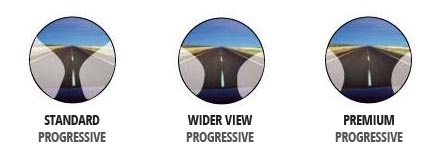
Progressives provide near, intermediate and distance vision in one lens with no visible line — generally the better all-round choice for presbyopia. They come in four design tiers (Basic, Premium, Advanced and Individual), with higher tiers offering wider, more natural fields of view. If you're noticing the need to hold things further away, our guide to the signs you may need progressive lenses can help.
Bifocal lenses
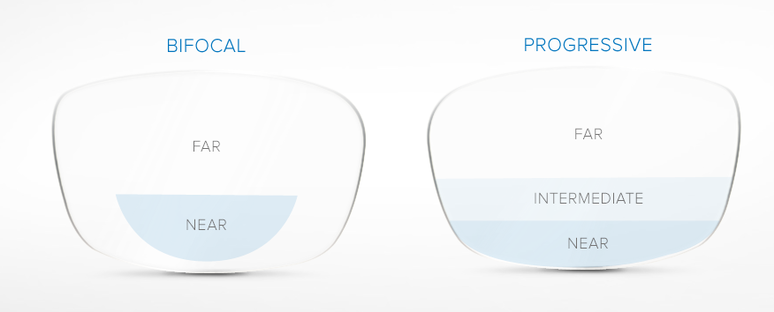
Traditional lenses split into two zones — distance above, reading below — divided by a visible line. Progressives are usually the better choice for all-round vision, but bifocals remain available for those already accustomed to them.
Extended reading lenses
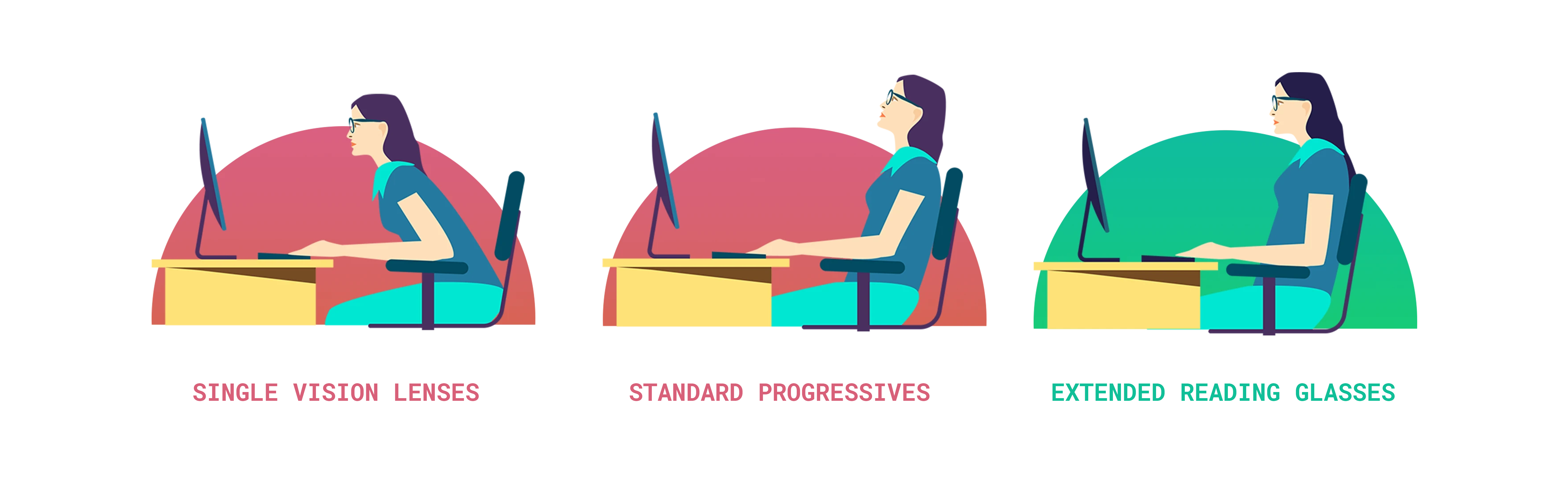
Reading+ lenses are seamless dual-focus designs with a more flexible near-to-intermediate range than standard reading glasses — well suited to computer and office work. Designs include Zeiss Office, Essilor Digitime and HOYA Workstyle.
Lens features and coatings
Treatments and coatings can be added to most lens designs to improve clarity, comfort and durability.
Anti-reflective (anti-glare) coating
Included as standard on all our lenses. An anti-reflective coating removes distracting reflections for clearer vision day and night, reduces glare-related eye strain, and makes the lenses look almost invisible. To understand how the different coating options compare, see our overview of lens coating options.
Thin (high-index) lenses
Higher-index materials make lenses thinner and lighter — particularly worthwhile for stronger prescriptions. As a rough guide:
- Thin (1.50–1.60): suitable for low-to-moderate prescriptions; durable and a safer option for children.
- Super Thin (1.67): for moderate-to-high prescriptions (around +/- 3D to 6D).
- Ultra Thin (1.74–1.76): among the thinnest plastic lenses, for higher prescriptions (over +/- 6D).
Our optometrists will advise the right index for your prescription and frame choice. There's more on this in our article on thin prescription lenses.
UV protection
Protecting your eyes from Singapore's strong sunlight matters at every age. Options include Transitions light-adaptive lenses that darken outdoors and clear indoors, polarised lenses that filter UV and glare effectively for sharper outdoor vision, and invisible UV coatings that block UVA and UVB radiation. You can read more about how Transitions lenses work before choosing.
Blue-light protection
Blue-light-filtering coatings are designed to reduce exposure to the blue-violet light emitted by LED screens and digital devices, which some people find contributes to eye strain and disrupted sleep. Options include Essilor Crizal Sapphire, Nikon SeeCoat Blue, Zeiss BlueProtect, HOYA BlueControl and Tokai Lutina. For a clear explanation of the evidence, see how blue light affects your eyes.
Driving lenses
Designed for demanding, changing driving conditions, these lenses combine premium anti-reflective coating with a subtle filter tint to help reduce headlight glare and sharpen vision in low light. Designs include Essilor Crizal Drive, Zeiss DriveSafe and HOYA EnRoute.
Why the fitting matters more than the brand
A premium lens only performs to its potential when the prescription is accurate, the measurements are precise, and the design is matched to how you use your eyes. That fitting — not the logo — is what determines how comfortable and clear your glasses feel. Our optometrists take the time to get it right, and because we're independent, our recommendation is based on your needs, not a stocking agreement.
Browse our eyewear frames to pair with your lenses, or book an appointment at our branch at The Cathay, beside Dhoby Ghaut MRT or at Jelita Mall.
Frequently asked questions
What's the difference between single-vision and progressive lenses?
Single-vision lenses correct one viewing distance, while progressive lenses provide near, intermediate and distance vision in a single lens with no visible line. Progressives are typically recommended for presbyopia, when reading up close becomes difficult with age.
Do I need blue-light lenses?
It depends on your symptoms and screen habits. Blue-light coatings may help people who experience eye strain or disrupted sleep from heavy device use. Our optometrists can advise whether they're worthwhile for you during your consultation.
How do I know which lens thickness to choose?
It comes down to your prescription strength and frame style. Higher prescriptions benefit from higher-index (thinner) materials. We'll recommend the appropriate index at your fitting so your glasses stay light and comfortable.
Can you source a specific lens brand for me?
Yes. As an independent practice we can fit lenses from Essilor, Zeiss, Nikon, HOYA, Shamir and Tokai, so if you have a preferred brand or design we can usually source it.