

老花眼 in English: Presbyopia – 6 Signs You May Have It
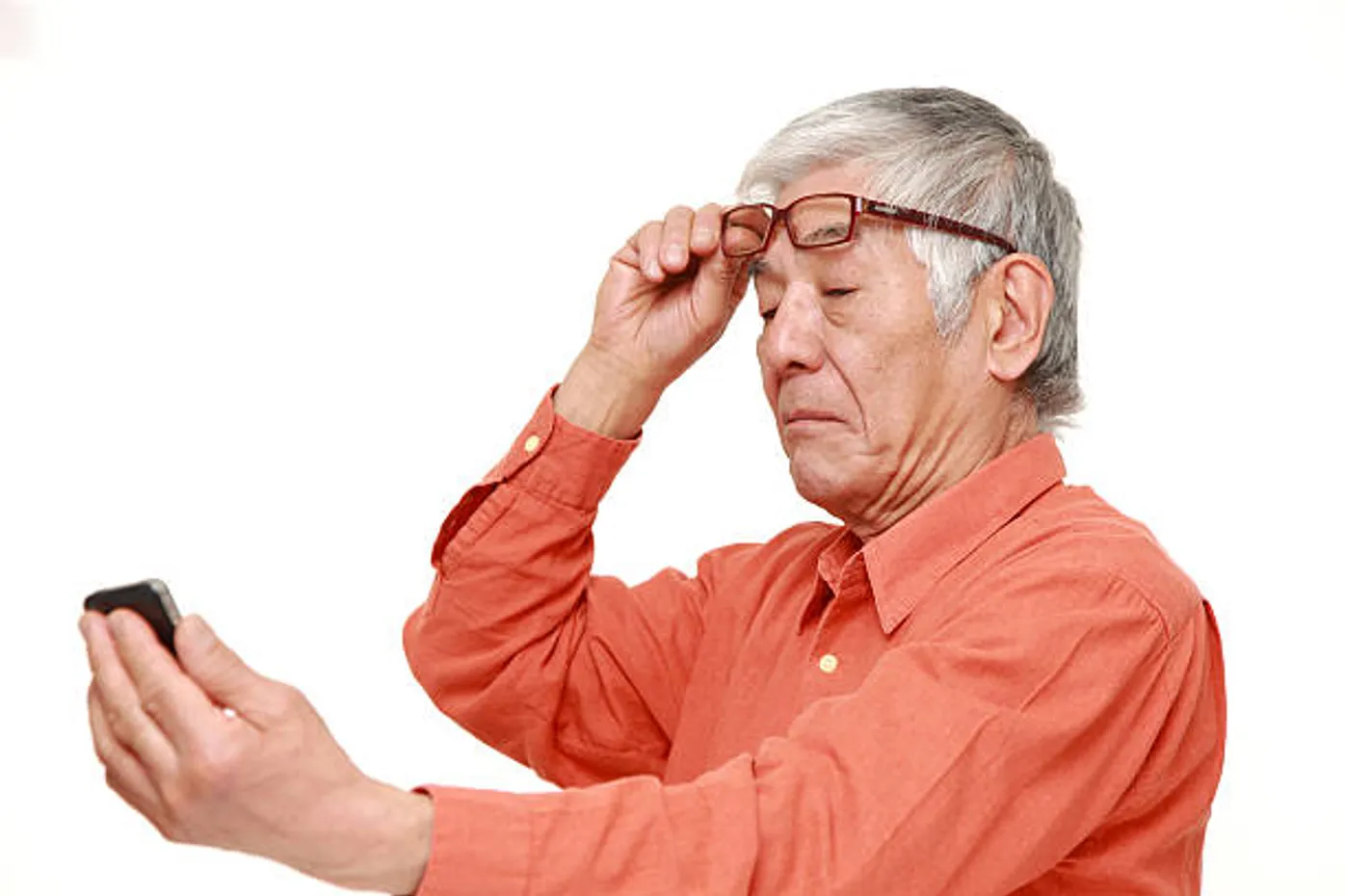
What is 老花眼 in English?
老花眼 (lǎo huā yǎn), also written 老花, is called presbyopia in English. It is the gradual, age-related loss of the eye's ability to focus on things up close, and it usually becomes noticeable from around age 40. It is a normal part of ageing, not a disease, and it can be corrected with glasses or contact lenses.
As we grow older, the natural lens in our eye becomes less flexible, making it harder to focus clearly on near objects. This is called presbyopia (老花眼). No one knows exactly what causes the lens to become less flexible, but it happens to everyone as a natural part of ageing.
Why does presbyopia happen?
To see clearly, light enters the eye and the lens bends and focuses it onto the retina. The lens changes shape so that the eye can focus on objects at different distances. From early in life, perhaps as early as age 10, the lens gradually stiffens and loses some of its ability to change shape. By our 40s, the lens has trouble focusing up close, and near tasks such as reading or needlework start to look blurred. The lens continues to stiffen until about age 65, when nearly all of its flexibility has been lost.
Do short-sighted and long-sighted people get presbyopia too?
Yes. Presbyopia eventually affects everyone, including people who are already long-sighted (hyperopic) or short-sighted (myopic). Long-sighted people already have to work harder to focus on near objects, so they may notice presbyopia a little earlier. Short-sighted people still experience presbyopia when wearing their glasses or contact lenses for distance, although they can often see close objects quite clearly when they take their glasses off.
6 signs you may have presbyopia
Here are six signs you can watch for:
- Words become blurred at a reading distance that used to be comfortable.
- You need to hold your phone, newspapers or books further away to see the details clearly.
- You need brighter light to see clearly.
- Reading is harder late at night, or when you are tired or stressed.
- Your eyes tire quickly during close work that used to feel comfortable all day.
- You get headaches from eye strain after reading or close work.
Many people over 40 start to notice some of these signs. The change usually happens gradually over many years, so many people do not notice small changes and only seek help when focusing up close starts to interfere with daily life.
Why do some people notice it earlier?
People who do a lot of close work often notice presbyopia sooner, because their eyes spend long periods focusing up close. If you do a lot of close work, take a 10-minute break every one to two hours and look at something far away to rest your eyes from close focusing.
How is presbyopia corrected?
The most common options are reading glasses for close work, progressive lenses that give clear vision at distance, intermediate and near in one pair of glasses, and multifocal contact lenses. Which suits you depends on your prescription, your eye health and how you use your eyes during the day, so an eye check comes first.
Read more: Progressive lenses · Multifocal contact lenses
When should you get an eye check?
If you notice any of these signs, our optometrists and opticians can check your eyes and help you find the option that suits you best.