

Children's Eye Exams & Vision Screening in Singapore
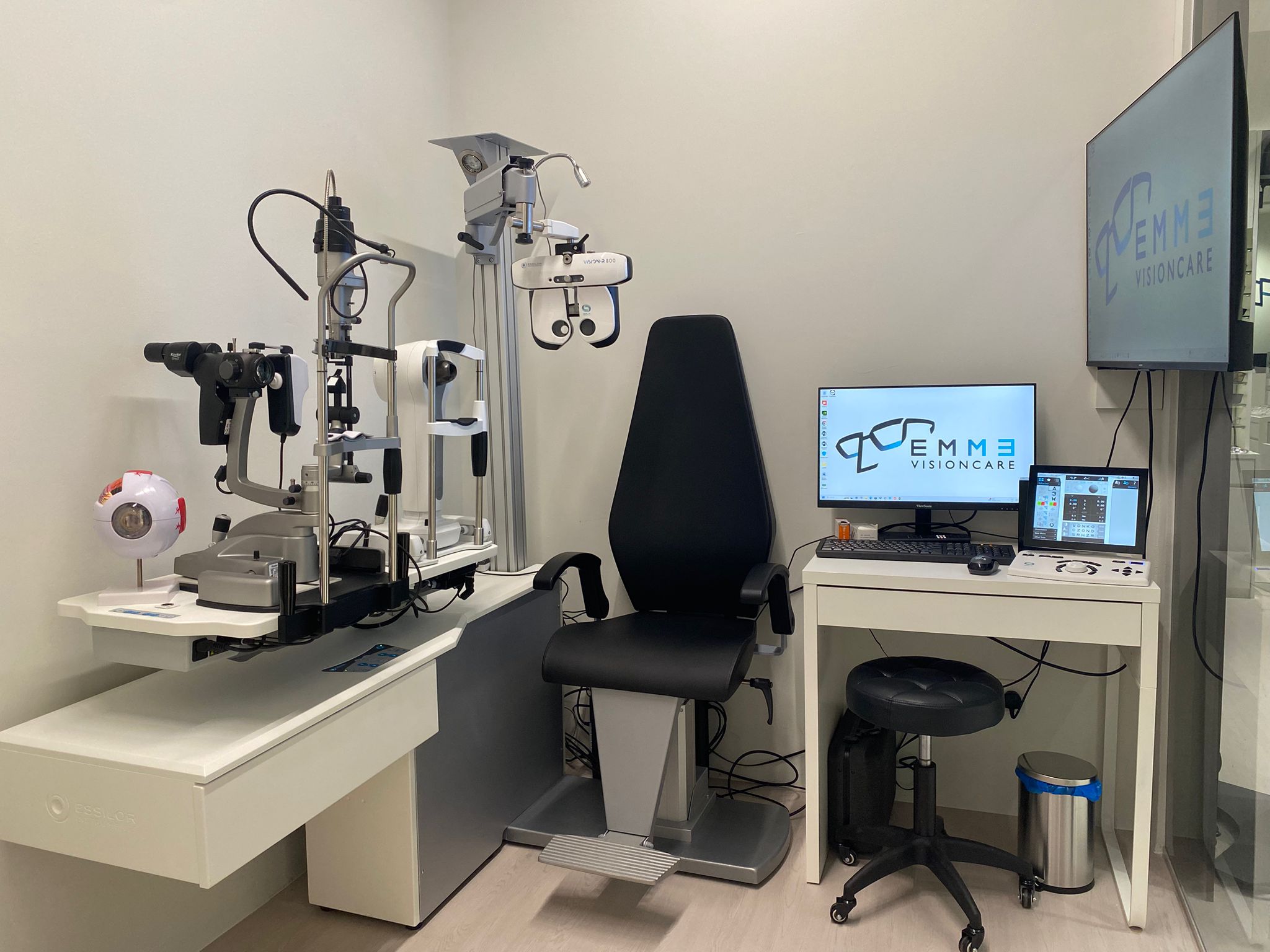
A children's eye exam is a detailed check of how clearly your child sees and how healthy their eyes are. At EMME Visioncare in Singapore, our optometrists assess young and school-age children for refractive errors, focusing and eye-teaming problems, lazy eye (amblyopia), squint (strabismus), and early signs of short-sightedness. As a general guide, a child benefits from a full eye exam before starting primary school, with regular checks through the school years.
Why children's eye exams matter in Singapore
Singapore has one of the highest rates of childhood short-sightedness in the world. According to the Health Promotion Board, around 65% of children here are short-sighted by Primary 6 (roughly age 12), and studies place the average age of onset at about 8.5 years. Because vision develops through the early school years, problems that go unnoticed at this stage can affect a child's reading, learning, and confidence.
Many vision problems in children produce no obvious symptoms. A child who has never seen clearly often does not realise anything is wrong and rarely complains. A routine eye exam is the most reliable way to pick up these problems early, while they are most treatable.
School vision screening is not a full eye exam
Vision screening in schools is useful, but it is designed mainly to flag children who need a closer look, and it usually checks distance vision only. A full eye exam goes further. We assess near vision, how the two eyes work together, focusing ability, colour vision, depth perception, and the health of the eye itself. A mild squint, a focusing problem, or amblyopia can be present even when a child passes a basic distance-vision screening.
What we check in a children's eye exam
The exam is tailored to your child's age and how readily they can take part. Depending on what is appropriate, it may include:
- Visual acuity – how clearly your child sees at distance and near, using charts suited to their age and reading ability.
- Refraction – measuring any short-sightedness, long-sightedness, or astigmatism. We use autorefraction and retinoscopy for younger children, and subjective refraction for those old enough to respond reliably.
- Eye alignment and teaming (cover test) – checking for a squint (strabismus) and how well the eyes work together for reading and learning.
- Focusing and binocular vision – assessing the eyes' ability to focus and coordinate, which affects concentration and reading comfort.
- Depth perception (stereopsis) and colour vision – both important for learning and everyday activities.
- Eye health assessment – we examine the front of the eye and use fundus photography and OCT (optical coherence tomography) to image the back of the eye. We do not routinely use dilating drops at our clinic; where a dilated or drop-based (cycloplegic) assessment is clinically indicated, we refer your child to an ophthalmologist.
Signs your child may have a vision problem
It is worth booking an eye exam if your child:
- sits very close to the screen or holds books close to their face;
- squints, tilts their head, or covers one eye to see;
- rubs their eyes often, or complains of headaches or tired eyes;
- loses their place when reading, or avoids reading and close work;
- has an eye that turns in or out, or seems to wander.
These signs do not always mean there is a problem, but they are worth checking. Conditions such as amblyopia tend to respond best to treatment when picked up early in childhood.
When should my child have their eyes tested?
As a general guide, children benefit from a full eye exam before starting primary school, and regular checks through the school years – particularly during the period of rapid eye growth, around ages 6 to 12. Children with a family history of short-sightedness, or who already wear glasses, may need more frequent monitoring. If you notice any of the signs above, it is sensible to arrange a check sooner rather than waiting for the next school screening.
Myopia in children
If your child is becoming short-sighted, the aim is not only to correct their vision but to slow how quickly it progresses, which helps lower the long-term risk to their eye health. We run a dedicated myopia control programme with options including Ortho-K, myopia control soft contact lenses, myopia control spectacle lenses, and atropine eye drops co-managed with an ophthalmologist. For a plain-language overview, see our guide on whether childhood myopia can be controlled.
Looking for an adult check instead? See our comprehensive eye exam for adults.
Children's eye exam FAQ
From what age can my child have an eye exam?
Children can have their eyes examined from a young age. We adapt the tests to your child's age and ability, using picture or matching charts and objective measurements for those too young to read a standard letter chart. A first full exam before primary school is a sensible milestone.
Isn't the school vision screening enough?
School screening is a helpful first filter, but it generally checks distance vision only. A full eye exam also assesses near vision, eye teaming, focusing, and eye health, which a basic screening may not detect.
Will my child's eyes be dilated with drops?
We do not routinely use dilating drops at our clinic. We assess eye health using fundus photography and OCT imaging. If a dilated or cycloplegic (drop-based) assessment is needed, we will refer your child to an ophthalmologist.
My child has no symptoms – do they still need an exam?
Yes. Many childhood vision problems have no obvious symptoms, and a child who has always seen a certain way may not know their vision could be clearer. Regular exams help catch issues early.
Book your child's eye exam
Early checks support comfortable, clear vision through your child's school years. To arrange a children's eye exam, contact us to book an appointment, and visit our branch at The Cathay or Jelita Mall.