


Keratoconus
Keratoconus is a progressive eye condition that predominantly emerges during one's younger years. It is estimated to affect approximately 1 in 2,000 individuals across the global population, with no discernible gender bias. The name "keratoconus" is derived from the Greek words for "cornea" and "cone," aptly describing the transformation of the cornea—the eye's frontal layer—into an irregular cone-like shape. This morphological change is attributed to the gradual thinning of corneal tissue, a phenomenon known as ectasia.
Most diagnoses of keratoconus occur between the ages of 16 and 30. Although it's common for both eyes to be affected, the onset and progression rate can vary between them. Notably, instances where keratoconus manifests during adolescence tend to exhibit a more rapid and aggressive progression. It's crucial for individuals to be aware of this condition, especially if they experience vision changes during their formative years, to ensure timely diagnosis and intervention.
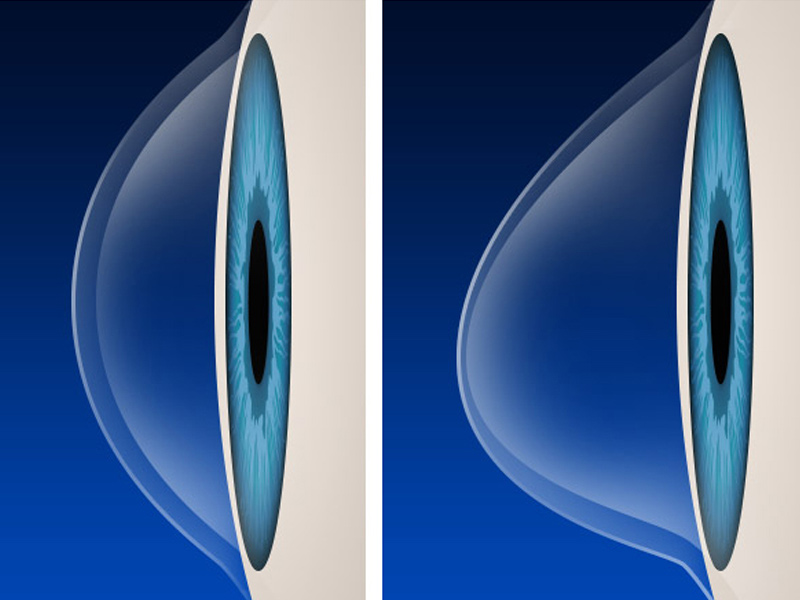
Signs and Symptoms of Keratoconus
Keratoconus presents with a range of symptoms that can significantly impact one's vision. Common indicators include:
- Blurred vision
- Ghosting or double vision
- Flaring or streaks of light
- Halos surrounding lights
- Distorted vision, making straight lines appear wavy
In its early stages, keratoconus can sometimes be mistaken for mere short-sightedness or basic astigmatism, especially by practitioners who may lack experience or the necessary diagnostic tools. This underscores the importance of seeking care from well-equipped and knowledgeable eye care professionals.
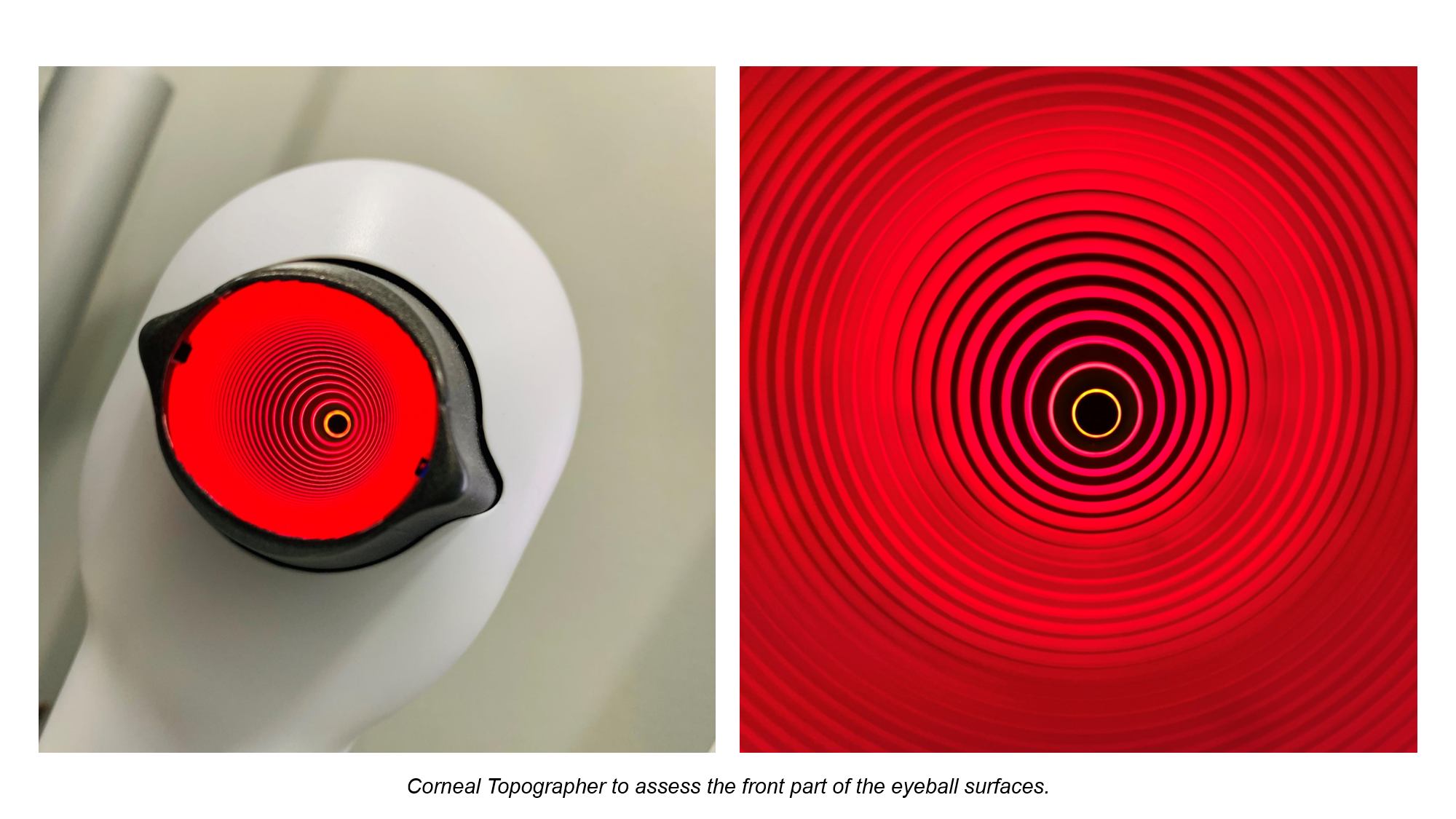
A pivotal instrument in the detection and monitoring of keratoconus is the corneal topographer. This advanced device meticulously measures the cornea's shape, generating a detailed 3D topographical map of its surface contours. Such precision allows for the early identification of any changes or irregularities in the cornea's shape, even before they might cause noticeable vision problems.
At our clinic, we prioritize the use of the corneal topographer, especially when there's a suspicion of potential corneal distortions. This proactive approach ensures that our patients receive accurate diagnoses and timely interventions, safeguarding their vision for the future.
Underlying Causes of Keratoconus
Keratoconus arises from a combination of genetic and environmental factors. Here's a deeper dive into its origins:
1. Genetic Predisposition: Research suggests that genetics play a significant role in the development of keratoconus. Approximately 20% of cases can be traced back to a familial connection. This hereditary link points to an inherent weakness in the collagen fibers that constitute the cornea's structure. As a result, the cornea becomes susceptible to distortion.
2. Environmental Triggers: Chronic eye rubbing, especially in individuals with atopic conditions, has been identified as a potential environmental trigger for keratoconus. People with conditions like hay fever, allergies, eczema, and asthma often experience itchy eyes, leading them to rub their eyes frequently. This repeated action can exacerbate the inherent weakness in the cornea, accelerating the progression of keratoconus.
Given the detrimental effects of eye rubbing, especially in those predisposed to keratoconus, we strongly advocate for its avoidance. By understanding and addressing both the genetic and environmental factors, individuals can take proactive measures to manage and potentially mitigate the impact of this condition on their vision.
Treatment Options for Keratoconus
Keratoconus is a progressive eye condition that alters the shape of the cornea, leading to vision impairment. While there's no one-size-fits-all solution, several treatments can help manage its symptoms and improve visual clarity. Here's a comprehensive overview:
1. Glasses:
- Purpose: Primarily used to enhance functional vision, especially during the early stages of keratoconus.
- Effectiveness: In milder forms of the disease, glasses can offer partial vision improvement. However, due to the cornea's irregular distortion, standard glasses lenses can't fully rectify the condition. Some blurriness or ghosting typically persists. As keratoconus advances, glasses become less effective, often failing to provide satisfactory vision.
2. Contact Lenses:
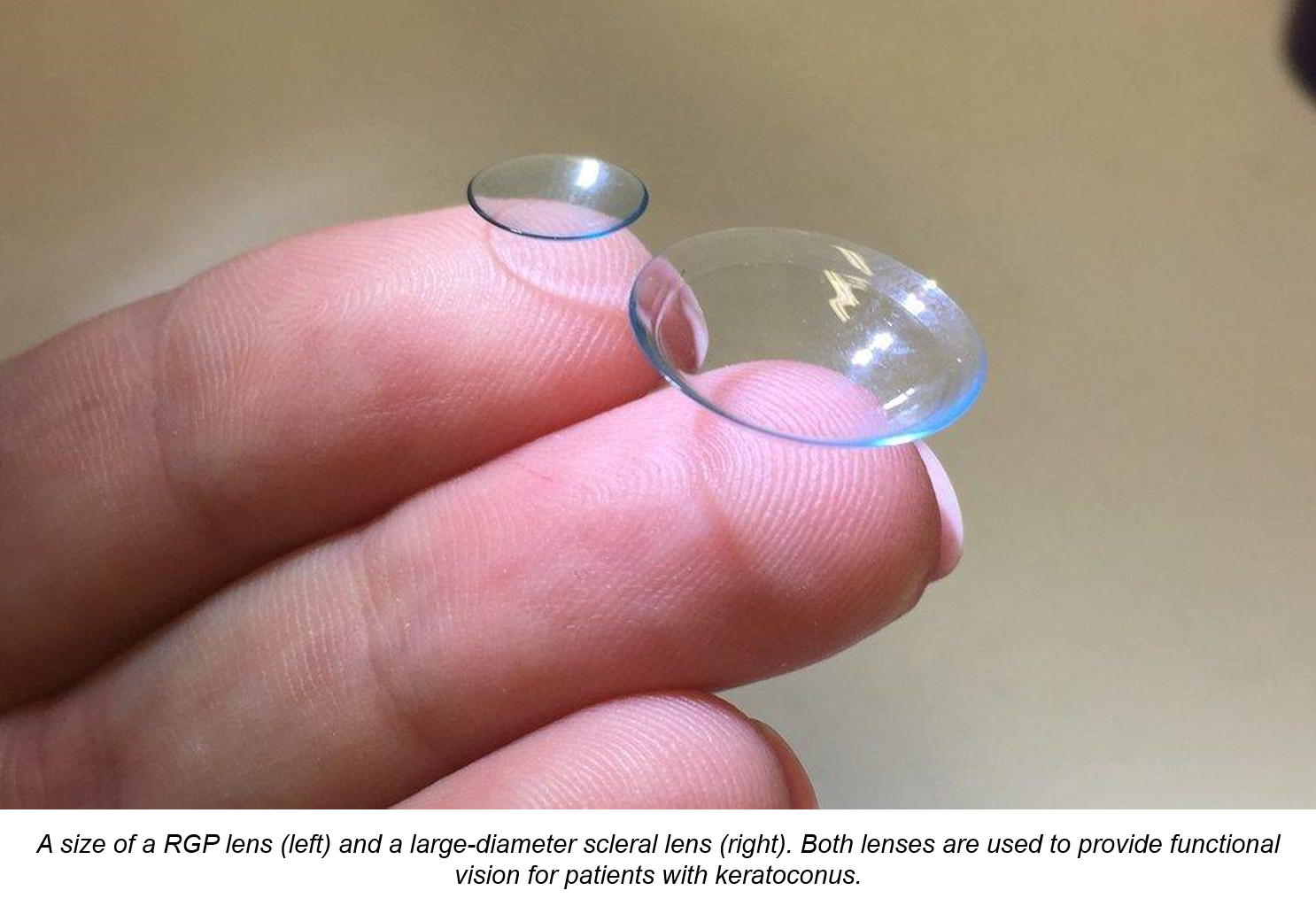
Specialized rigid contact lenses are the go-to solution for many with moderate keratoconus. They offer superior vision correction compared to glasses by compensating for the cornea's irregularities.
Rigid Gas-Permeable (RGP) Corneal Lenses: Traditional hard lenses that sit directly on the cornea. They provide a smooth optical surface, enabling light to focus accurately into the eye.
Hybrid Contact Lenses: A fusion of design, these lenses feature a rigid center surrounded by a soft outer skirt. This combination offers the clarity of RGP lenses with the comfort of soft lenses.
Scleral and Mini-Scleral Lenses: These large-diameter lenses cover the entire cornea and extend onto the sclera (the eye's white portion). They're especially beneficial for advanced keratoconus cases, reducing the risk of corneal scarring. Many patients find that scleral lenses can delay or even eliminate the need for more invasive treatments, like corneal grafts.
Trends and Recommendations: Hybrid and scleral lenses are gaining global traction as preferred choices for keratoconus patients. They often provide enhanced comfort compared to smaller RGP lenses. It's crucial to have these lenses fitted by specialty contact lens practitioners equipped with tools like a corneal topographer and customized lens fitting sets.
At EMME Visioncare HarbourFront Centre, we pride ourselves on offering all the aforementioned contact lens options for keratoconus patients. Our seasoned optometrists ensure a tailored fit, optimizing comfort and vision for each individual.
Specialized Treatments for Keratoconus
For those with advanced or rapidly progressing keratoconus, specialized treatments administered by ophthalmologists become essential. These interventions aim to stabilize the condition, improve vision, and prevent further deterioration. Here's an in-depth look at these advanced treatments:
1. Corneal Collagen Cross-Linking (CXL):
- Purpose: CXL is a groundbreaking procedure designed to enhance the strength and integrity of corneal tissue, effectively halting the progression of keratoconus.
- Procedure: During CXL, riboflavin (vitamin B2) drops are applied to the cornea, which is then exposed to ultraviolet light. This combination strengthens the collagen fibers within the cornea.
- Benefits: The primary goal of CXL is to arrest the progression of keratoconus. Its effectiveness has been so profound that many patients can now sidestep the need for a corneal graft later in life.
- Post-Treatment: While CXL is instrumental in halting keratoconus progression, it doesn't inherently restore clear vision. Post-CXL, patients typically still require vision correction, often via specialized contact lenses like RGP, hybrid, or scleral lenses.
- Accessibility: As of May 2018, in Australia, individuals with documented keratoconus progression might qualify for Medicare-subsidized CXL treatments, making it more accessible to those in need.
2. Intacs Corneal Ring Segment Implants:
- Purpose: These are tiny, crescent-shaped devices implanted into the cornea to reshape its front surface.
- Benefits: Intacs can flatten the steep part of the cornea, leading to improved vision and potentially reducing the need for more invasive surgeries.
3. Corneal Transplantation/Graft Surgery:
- Purpose: This surgical procedure involves replacing the diseased or scarred cornea with healthy donor tissue.
- Indication: It's typically considered when other treatments fail to provide satisfactory visual outcomes or when the cornea becomes dangerously thin or scarred.
- Outcome: A successful corneal transplant can significantly improve vision, but post-operative care and regular check-ups are crucial for its longevity.
In conclusion, while keratoconus presents challenges, advancements in ophthalmological treatments offer hope and improved quality of life for patients. It's essential to consult with eye specialists to determine the most suitable treatment pathway tailored to individual needs.
If you've received a diagnosis of keratoconus or have been identified with an irregular cornea, it's essential to understand that you're not alone, and there are advanced solutions available. We're here to guide you every step of the way, from monitoring the progression of your condition to exploring the most effective treatment options tailored to your unique needs.
As one of Singapore's leading advanced contact lens practitioners, our optometrist possesses extensive expertise in addressing complex eye conditions. We specialize in fitting a range of lenses, including corneal RGP lenses, hybrid contact lenses, and scleral lenses, ensuring optimal comfort and vision clarity. Our commitment is to provide you with personalized care, ensuring that your vision is not just corrected but also enhanced to its fullest potential.
Reach out to us, and let's embark on this journey towards clearer vision together.
For a deeper understanding and additional resources on keratoconus, we recommend visiting the Keratoconus Group's official website: https://www.keratoconusgroup.org/. This platform offers a wealth of information, research updates, and personal stories that can provide both insight and comfort.
Moreover, if you're looking for a supportive community, consider joining the Keratoconus Group on Facebook: https://www.facebook.com/groups/keratoconusgroup/. With a thriving membership of over 28,000 individuals from across the globe, this group brings together those living with keratoconus and renowned eye care professionals. Here, members share their personal journeys, treatment experiences, and invaluable advice. Engaging with this community can offer you a sense of belonging, understanding, and a treasure trove of firsthand knowledge.
Navigating keratoconus can be challenging, but with the right resources and a supportive community, you're never alone on this journey.