

Pterygium
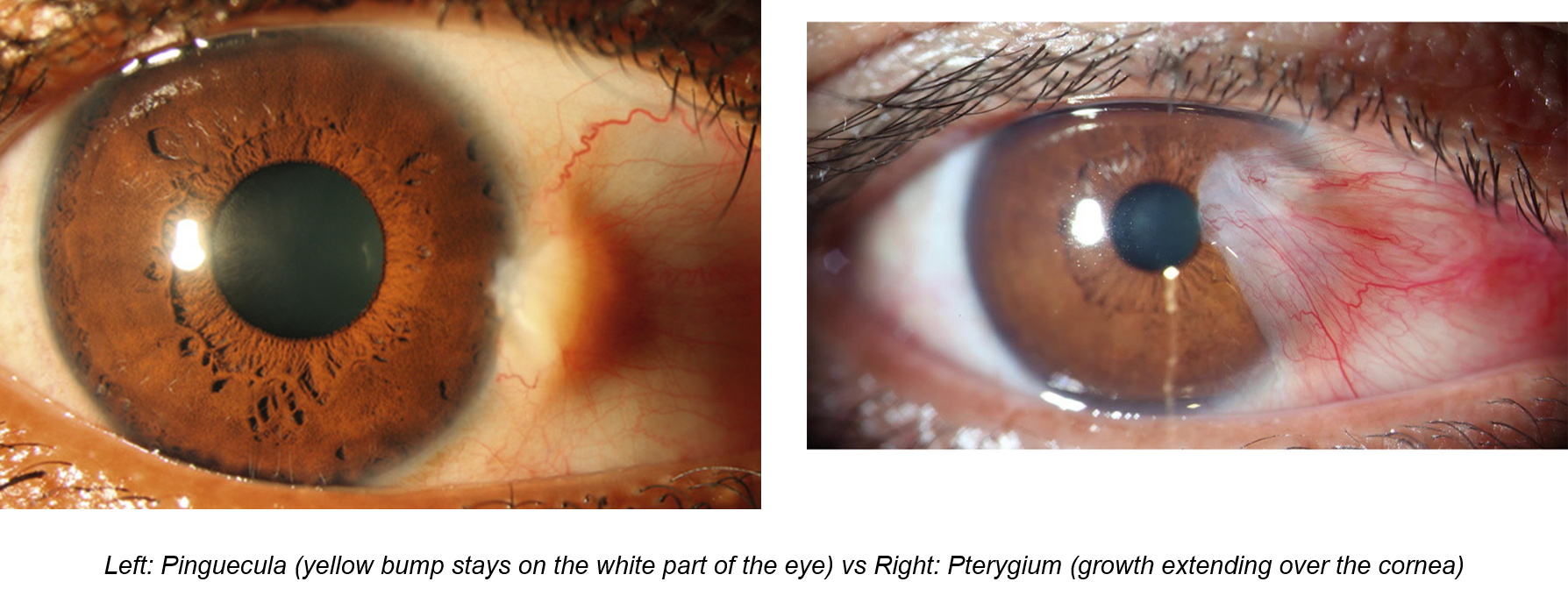
Pterygium
A pterygium is a benign, wing-shaped growth of the eye's surface membrane (the conjunctiva) that slowly extends onto the clear front window of the eye (the cornea). It is non-cancerous, usually develops over many years, and is strongly linked to long-term exposure to ultraviolet (UV) light, wind and dust. Because of that UV connection, it is sometimes called “surfer's eye.”
Pterygium is particularly relevant here in Singapore. Our equatorial location means high UV levels all year round, and the research reflects this: the Tanjong Pagar Survey reported pterygium in roughly 7% of Singaporean Chinese adults aged 40 and above, with risk rising for people who spend long hours outdoors. Those who have worked or played outside for years without sunglasses or a hat are the most commonly affected.
Signs and symptoms
In its early stages a pterygium often causes few or no symptoms. As it enlarges, you may notice:
- A raised, fleshy or pinkish triangular patch, usually on the side of the eye closer to the nose
- Redness, irritation, or a gritty, foreign-body sensation
- Dryness that comes and goes
- Blurring or astigmatism if the growth begins to distort the cornea
- Increased glare
A related condition: pinguecula
A similar but more common condition is a pinguecula (often described as a “yellow spot on the eye”), which is also linked to UV exposure. A pinguecula is a yellowish, slightly raised thickening of the conjunctiva on the white of the eye, near the edge of the cornea — most often on the side closer to the nose, though it can appear on the outer side too. These are benign and do not require surgery. Occasionally a pinguecula becomes inflamed (increased redness and irritation, known as “pingueculitis”), especially when the eyes are dry or exposed to dust and wind. This is usually managed with lubricating drops or, where needed, anti-inflammatory eye drops. If you experience ongoing irritation, a dry eye assessment can help identify contributing factors.
How we monitor and treat pterygium
Most pterygia do not progress to the point of needing surgery. At EMME Visioncare we monitor any growth or change in size over time by photographing the front of your eyes during your comprehensive eye examination, so we can compare images at each visit and track the rate of change.
If a pterygium advances more than roughly halfway towards the pupil, it can start to distort vision, induce astigmatism and increase glare, as well as becoming more cosmetically noticeable. In these cases we can refer you to a corneal specialist (ophthalmologist) for assessment. Surgical treatment involves removing the pterygium and taking steps to reduce the chance of it growing back.
Protecting your eyes from UV
Because UV exposure is the main modifiable risk factor, sun protection is the most practical way to lower your risk of pterygium and pinguecula — and to help slow an existing one. Protect your eyes, and your children's eyes, by:
- Wearing well-fitting sunglasses that block UV whenever you are outdoors
- Choosing UV-coated spectacle lenses for everyday wear
- Considering Transitions (photochromic) lenses, which darken in sunlight and block 100% of UV rays at all times
- Adding a wide-brimmed hat or cap for extended time outside
You can read more about how UV rays can damage your eyes and about how Transitions lenses work on our blog.
Frequently asked questions
Is a pterygium dangerous?
A pterygium is benign and not a form of cancer. It is generally only a concern if it grows far enough to affect vision or causes persistent irritation, which is why periodic monitoring is recommended.
Will a pterygium go away on its own?
No. A pterygium does not disappear by itself, though many remain small and stable for years. If one progresses and affects vision or comfort, it can be surgically removed.
Can I prevent a pterygium?
You can lower your risk by reducing UV exposure — consistent use of UV-blocking sunglasses or UV-coated lenses and a hat outdoors is the most effective preventive step.
Concerned about a growth or spot on your eye? Book a comprehensive eye examination at EMME Visioncare @ The Cathay, beside Dhoby Ghaut MRT or at Jelita Mall. Book an appointment, or see our Cathay branch page and Jelita Branch page for directions and opening hours.