

Diabetic Retinopathy
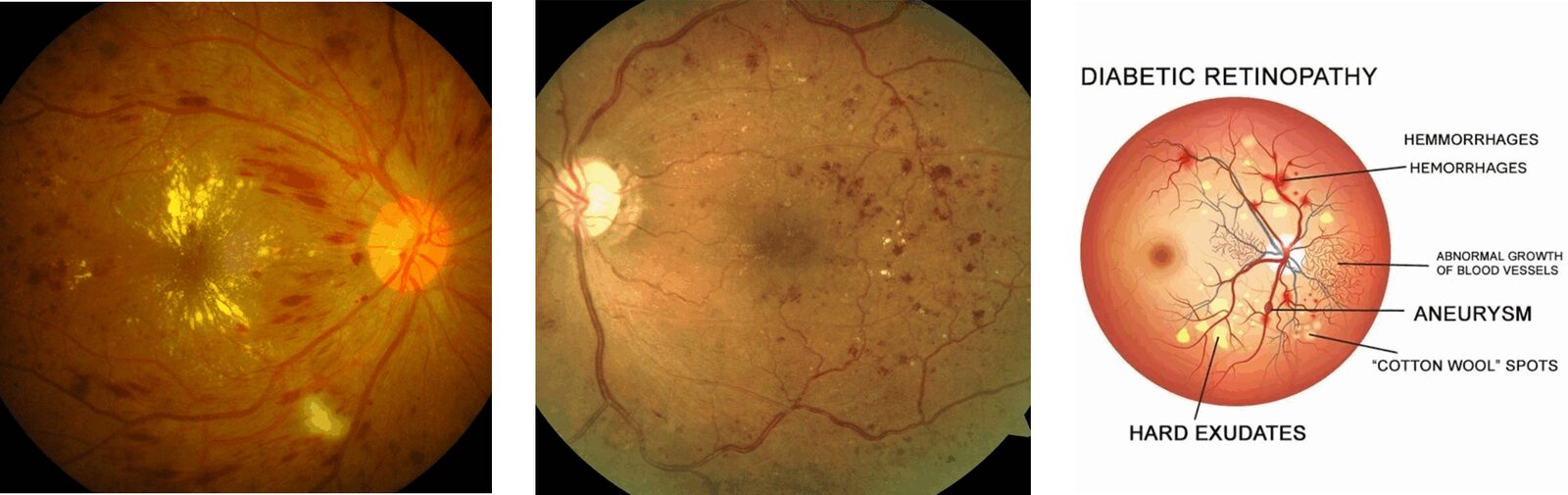
Diabetic retinopathy is an eye complication of diabetes in which persistently high blood sugar damages the tiny blood vessels of the retina — the light-sensitive layer at the back of the eye. These vessels can leak fluid or blood, swell, or close off, and in later stages the eye may grow fragile new vessels. Left undetected, this can lead to blurred vision, scarring and permanent sight loss.
Diabetic retinopathy is recognised as a leading cause of preventable blindness in working-age adults. Population studies in Singapore have found that roughly one in three people with diabetes shows some signs of retinopathy, and around one in eleven has a vision-threatening form — so regular screening matters for anyone living with Type 1 or Type 2 diabetes.
Why early detection is so important
In its early stages diabetic retinopathy often has no symptoms at all — your vision can feel completely normal while damage is quietly developing. By the time vision becomes blurred or distorted, the disease may already be advanced. This is why a regular diabetic eye check is the most reliable way to catch changes early, while they are still manageable.
A comprehensive eye examination also lets us monitor your eyes over time. At EMME Visioncare we use detailed retinal imaging as a standard part of the assessment, so we can compare scans between visits and identify subtle changes early. In some cases, an optometrist can even pick up signs that point to diabetes before a person knows they have the condition.
Who is at higher risk
The risk of developing diabetic retinopathy increases with:
- Longer duration of diabetes (the longer you have had diabetes, the higher the risk)
- Poorly controlled blood sugar levels
- High blood pressure and high cholesterol
- Pregnancy in women with diabetes
- Kidney disease and smoking
Keeping blood sugar, blood pressure and cholesterol well managed — together with routine eye checks — can help reduce the risk of retinopathy developing or progressing. If you would like to understand your own profile better, our diabetes risk assessment guide is a useful starting point.
The diabetic eye check at EMME Visioncare
For anyone already diagnosed with diabetes, we recommend a diabetic eye health check at least once a year. We assess the health of your retina using advanced imaging rather than dilating drops, so the examination is comfortable and there is no lingering blur afterwards. Two key scans are used together:
- Fundus photography — high-resolution photographs of the retina that capture the blood vessels, optic nerve and any early bleeding, leakage or other changes across a wide view of the back of the eye.
- OCT (optical coherence tomography) — a detailed cross-sectional scan that shows the individual layers of the retina, helping us detect retinal swelling and fluid (diabetic macular oedema) that can be missed on photographs alone.
With your consent, we will send a report of our findings to your family doctor or endocrinologist so your diabetes can be managed as a whole. Where there are signs of significant diabetic retinopathy that need further treatment, we will refer you to an ophthalmologist (eye specialist) for ongoing care, and our optometrists can co-manage your eye health alongside them.
What to expect on the day
A diabetic eye check takes around 30 minutes. We will assess your vision, check your spectacle prescription and examine your retinal health using fundus photography and OCT imaging. Both scans are quick, non-invasive and painless — there are no needles and no dilating drops, so your vision is not blurred afterwards and you can return to your day as normal.
Our branch is conveniently located at The Cathay, beside Dhoby Ghaut MRT and at Jelita Mall, making it easy to reach by train.
Book a diabetic eye check at EMME Visioncare →
Diabetic retinopathy: common questions
What is diabetic retinopathy?
It is damage to the small blood vessels of the retina caused by diabetes. The vessels may leak, swell or close off, and in advanced stages abnormal new vessels can form, which can threaten vision if untreated.
What are the early symptoms?
Early diabetic retinopathy usually has no symptoms. Noticeable changes such as blurred or fluctuating vision, dark spots or floaters tend to appear only once the condition has progressed, which is why regular screening is so important.
How often should I have a diabetic eye check?
We recommend that people with Type 1 or Type 2 diabetes have a diabetic eye check at least once a year, or more frequently if your optometrist or doctor advises it.
Do you use dilating drops for the diabetic eye check?
No. We assess your retinal health using fundus photography and OCT scans, which are quick and non-invasive. There are no dilating drops, so your vision is not blurred afterwards and you can carry on with your day as usual.
Can diabetic retinopathy be treated?
When detected early, diabetic retinopathy can often be monitored and managed, and treatments such as laser or injections are available through an ophthalmologist for more advanced cases. Early detection gives the best opportunity to protect your sight.